- Home
- Organic Cotton
Organic Cotton
Organic cotton is cotton which is produced according to the internationally recognized organic farming standards of the EU regulation 834/2007, of the USA National Organic Program (NOP), the Indian National Program for Organic Production (NPOP) or the Japanese Agricultural Standard (JAS).
Organic cotton is grown in an environment where no pesticides, chemical fertilizers or herbicides have been used for a minimum of three years. Organic yarn spinners have set isolated processing areas in order to segregate the organic cotton from the conventional cotton. The dyeing and finishing of organic cottons also follows a strict procedure for chemical use in processing, eliminating all materials harmful to the body and the environment.
Why Choose Organic Cotton?
Some of the benefits of organic cotton are:
Manual farming and organic practices have a lower carbon footprint as the entire process consumes less fuel and energy and emits fewer greenhouse gases.
Not from genetically modified cottonseed.
Grown with natural rather than synthetic pesticides and fertilizers, no chemical defoliants used.
Eco-friendly processing that does not compromise workers’ health and helps reduce water and electric use and toxic runoff, e.g. non-chlorine bleach, silicon-free softeners and low impact, azo-free dyes.
Strict testing ensures the absence of contaminants like nickel, lead, formaldehyde, amines, pesticides and heavy metals.
People with allergies and chemical sensitivity especially benefit from organic cotton clothing, as conventional cotton may retain harmful toxic residues. Even if you don’t have sensitive skin, organic cotton will just feel better against your skin.
Organic Farming Has Social and Human Benefits Too
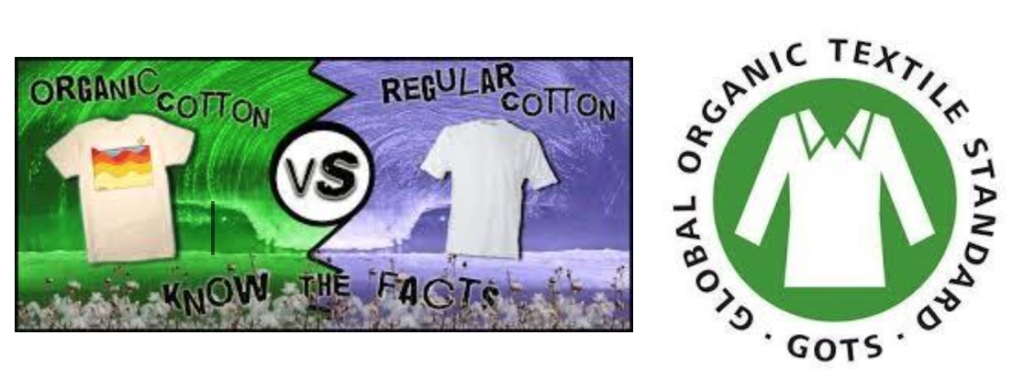
Note: The word Organic Cotton is not a guarantee that organic cotton has been used, as what constitutes organic cotton has still not been defined by law. The only assurance that organic cotton has been used, is the Control Union certificate. (GOTS of Organic Exchange labels).